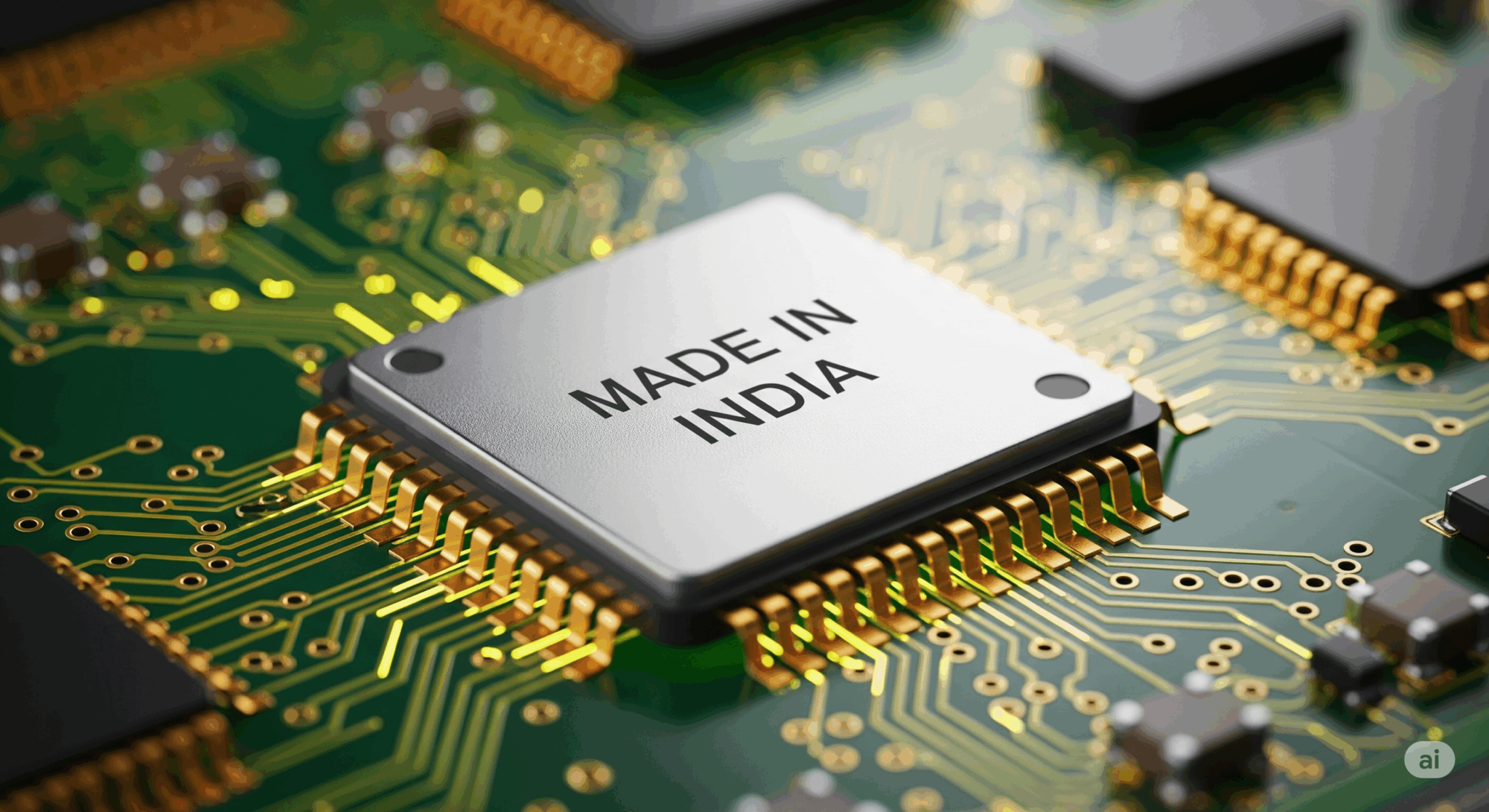
A New Engine for Technological Sovereignty: Bhiwadi’s Sahasra Facility and the Triple-S Advantage
India is rapidly advancing its ambitions to become a global hub for electronics manufacturing, having successfully approved 12 semiconductor units across various states under the India Semiconductor Mission (ISM) with cumulative proposed investments exceeding INR 1.6 trillion.
Building upon this massive national momentum, Rajasthan has officially onboarded this technological revolution by operationalizing India’s 13th semiconductor unit. Situated in the Bhiwadi industrial corridor, the newly inaugurated Sahasra Semiconductors facility (developed under the SPECS scheme) serves as a monumental milestone for the state.
This development is anchored in the massive potential of the broader Bhiwadi electronics manufacturing cluster. With 75 projects already ECMS-approved, the cluster spans 50 dedicated acres and commands a substantial proposed investment of INR 1,200 crore. Once fully operational at scale, this facility and the surrounding cluster are projected to boast a production capacity of 6 crore chips annually. The products emerging from this cluster will cater heavily to advanced packaging, memory generation, and critical domestic sectors like power electronics, smart metering, and industrial controls.
National Policy Aims: India Vision 2035
To understand the importance of Rajasthan’s emerging facilities, it is crucial to look at the broader national roadmap. India’s “Vision 2035” for the semiconductor industry is built on the philosophy of “Becoming Indispensable, Not Imitative”. Rather than merely attempting to catch up in the legacy wafer-manufacturing race, the national strategy pivots toward the “More-than-Moore” era. This involves dominating advanced packaging, system integration, compound semiconductors, and mature nodes.
By 2035, India intends to build a USD 120–150 billion semiconductor value chain and capture 10–13% of the global market. Domestically, the nation aims to achieve 35–50% chip self-sufficiency and retain 55–70% of the value across the supply chain. To enable this, the government is focusing on creating over 100 breakthrough Intellectual Properties (IPs), fostering National Semiconductor Zones (NSZs) with “six-nines” (99.9999%) utility reliability, and designing affordable, high-volume chips for 5G/6G devices, edge CPUs, and microcontrollers.
Connecting the National Vision with Rajasthan
Rajasthan’s strategic initiatives fit flawlessly into this national framework. India’s goal to become a top-three global destination for advanced packaging and Outsourced Semiconductor Assembly and Test (OSAT) is directly supported by Rajasthan’s electronics manufacturing clusters, such as the 100-acre ELCINA EMC in the Bhiwadi–Khushkhera corridor, which specifically targets ATMP operations.
Furthermore, Rajasthan has synchronized its state-level incentives with national goals through the Rajasthan Semiconductor Policy 2026. To de-risk projects and support the massive capital requirements outlined by the NITI Aayog roadmap, the state offers an aggressive capital subsidy equivalent to 60% of the subsidy sanctioned by the Government of India under the ISM. Coupled with 100% exemptions on electricity duties for seven years and flexible land payment structures, Rajasthan provides a highly lucrative financial runway for companies looking to align with India’s self-sufficiency targets.
The Core Advantages of Rajasthan: The “Triple-S” Foundation What truly separates Rajasthan as a highly strategic hub for semiconductor manufacturing is its native “Triple-S” advantage: Silica, Skill, and Solar.
- Silica (Materials and Infrastructure): Rajasthan is uniquely blessed with mineral-rich districts like Udaipur, Kota, and Bhilwara, which naturally support the critical materials industries required for upstream semiconductor processing. Leveraging this geographical wealth, the state is actively developing the Jodhpur-Pali-Marwar belt into the “Silicon Valley of Rajasthan”. This ambitious zone will provide a fully integrated ecosystem for frontier chip design, advanced system development, and heavy electronics manufacturing.
- Skill (Deep Talent Pipeline): Because semiconductor fabrication and packaging are exceptionally precision-driven, the national policy emphasizes building a robust talent pyramid. Rajasthan overwhelmingly meets this need by producing over 1 million graduates annually through an incredibly dense educational network comprising more than 4,600 higher-education institutions, 74 engineering colleges, and 3,000+ ITIs. Premier technological institutes like IIT Jodhpur, MNIT Jaipur, and IIIT Kota serve as continuous talent funnels, explicitly training engineers and technicians for electronics design, testing, production, and cleanroom maintenance.
- Solar (Abundant Green Energy): Semiconductor fabs are incredibly energy-intensive, requiring vast and uninterrupted power supplies. Rajasthan is currently the undisputed leader in Indian renewable energy, boasting over 35 GW of installed capacity, which includes approximately 29.5 GW of solar power. The state is targeting an aggressive 125 GW of clean energy by FY 2029-30. This immense solar dominance guarantees that incoming semiconductor plants receive the competitive, highly scalable, and green power necessary for continuous 24×7 operations.
Broader Ecosystem and Logistical Strengths Beyond the Triple-S advantage, Rajasthan’s geographic positioning acts as a profound multiplier for the semiconductor supply chain. The state sits at the confluence of the Delhi-Mumbai Industrial Corridor (DMIC) and the Amritsar-Kolkata Industrial Corridor (AKIC). Through deep integration with the Western and Eastern Dedicated Freight Corridors (DFCs), the state effectively compresses logistics cycles, ensuring that high-value electronic exports reach western ports and northern consumption hubs with maximal efficiency.
Supplemented by predictable governance—featuring single-window facilitation through the Raj Nivesh portal, self-certification regimes for factory acts, and the designation of cleanroom utilities as “Essential Services”—Rajasthan has successfully curated an environment where advanced semiconductor operations can thrive seamlessly. As the nation scales its capabilities to meet the Vision 2035 targets, Rajasthan’s infrastructure, incentives, and talent pipeline ensure that the state will act as a primary engine for India’s technological sovereignty.
Leave a Reply